
Dear friends,
If you follow music news, you know the room we work in. “AI” and “music” rarely share a sentence these days without a third word: theft. Models trained on artists who were never asked. Catalogs scraped in the night. A generation of musicians rightly demanding to know who fed the machine.
Let me start with the uncomfortable part: much of that criticism is deserved. When a model’s talent is other people’s unpaid work, that isn’t innovation. It’s laundering with a nicer interface.
We build online audio mastering with AI features, so we hear the accusation too. Sometimes politely, sometimes with pointed eyebrows at industry events. This year, instead of writing defensive threads about it, we did something slower and much more stubborn. This letter is the receipt.
We rebuilt our DSP. From scratch.
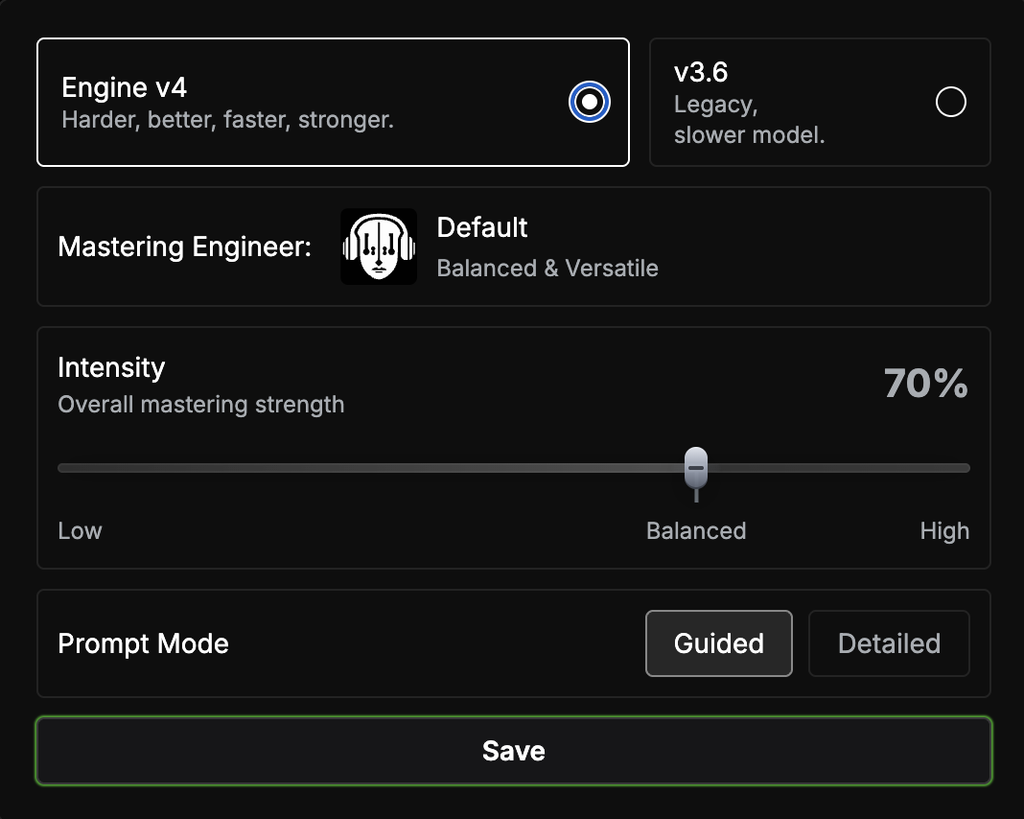
Engine v4, the DSP now running behind every master on SoundBoost, is a ground-up rebuild. Every EQ curve, every compression decision, every “does this chorus really deserve 0.4 dB more?” argument (there were many though) lives in code we wrote, tuned, and can defend line by line. No black boxes. And zero dependency on user data.
That last part is a real departure. Instead of the industry habit of feeding on whatever users upload, v4 grew up on a curation mechanism: algorithmic listening running on a fleet of machines, with training passes checked by ears we actually trust. And we didn’t just like the result better. We measured it, blind, the scientific way, and listeners agreed. More on that in a moment.
No catalogs were harmed.
Our methodology is built on synthetic learning: the engine studies signal behavior and psychoacoustics on material we generate and control ourselves, not on somebody’s discography. No artist’s catalog was harvested so that your song could shine.
The taste, though, came from you. Since our preset-based beginnings, every master has been graded by one honest metric: approval rates, thousands of quiet yes-and-no votes from working musicians. That’s what has steered the engine so far, and it’s what steers it next, deeper into what you actually love: sub-genres, niche genres, and stem types each getting their own answer instead of one curve for everyone.
And your song? It has exactly one job here: to get mastered. Your audio is not training data, and it never will be.
We blind tested real musicians to catch us.
Claims are cheap in AI, so we set two bars, and made both of them measurable. Remember, this first rebuild phase had one deliberate job: rewrite the DSP from zero while cloning the sound we already had. So the first bar was physics: before a single human voted, the rebuilt DSP had to null against the chain it replaced. It did. Difference signals sit 31 to 89 dB below the music, a 97 to 99.99% match module by module.
The second bar was human: blind A/B tests with real, working musicians. No labels, no logos, no hints about which master came from where. Just ears and faders. The scoreboard: 60% picked the new engine, 25% honestly couldn’t tell them apart, and 15% stayed loyal to the old one. In other words, 75% of ears heard the rebuild as at least as good as a chain we’d spent years polishing, and more of them preferred it. That’s the result you want when you replace something people already love.
And that was the whole point, with one happy accident. Our code brief said clone what older engine does today, note for note; the sound wasn’t supposed to change yet. But it came out better anyway. The best thing? The same master now comes out of an engine built for change, a new framework that can bend in a million directions, and the rest of this letter is about what we plan to do with that freedom.
It gets better because you argue with it.
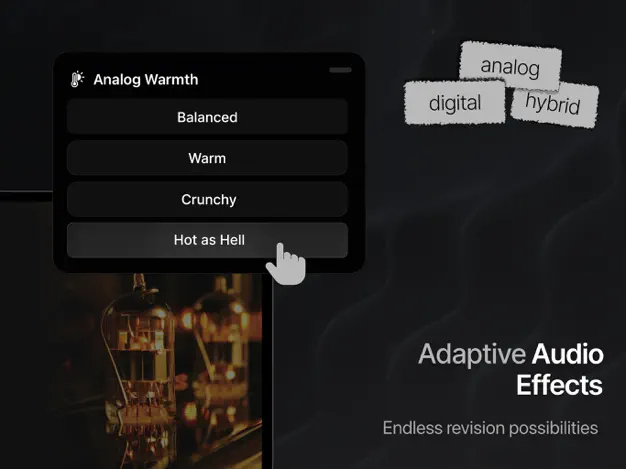
When you own a DSP that chews through audio at 17x real time, “owning” stops being an abstraction. It means a three-minute song masters in about ten seconds. (Yes, it’s 35% faster now!) It means trying eleven ideas on a mix costs less than one studio coffee break. And it means we’re no longer stuck with the broad strokes online mastering settled for years ago: very soon you’ll be able to ask for the deep stuff. Warmer low mids. A tamed hook. Drums that punch without the cymbals filing a complaint. The engine finally has the speed, and the reach, to say yes.
We’re building the checking half too. Community review is coming: working musicians blind-testing results, flagging the misses, and every flagged miss turning into a test the engine has to pass forever after. When we say we intend to be the best at this, that sentence is doing real work. It’s not a slogan. It’s a queue of things the community caught and we fixed.
The bench got longer this year.
Mastering brought most of you here, but a song has more problems than loudness. So the toolbench grew.
Voice Cleaner, our newest tool, rescues vocals recorded in rooms that were definitely not vocal booths.
Stem Splitter now lives as a standalone app, for those times when you need the stems but the session file is long gone, or when you’re trying to practice Bleed by Meshuggah on guitar, because it’s almost impossible without slowing it down first. Our Stem Splitter just does that.
Different tools, same stubborn goal: to build the best music production tools we know how to make, all in one place, without the studio invoice.
What’s next: your music, on your machine.
Because the engine is fully flexible now, nothing stops it from living where your music lives. At the first opportunity we’ll offer local mastering: processing on your own device, files that never leave your computer. Your 3 a.m. demo is basically a diary entry. Diaries shouldn’t need an upload button.
And something new has appeared on the horizon: real time. A SoundBoost VST is on its way, which puts this engine inside your DAW, mastering while you play. Not after the bounce, during the take. SoundBoost has always been your session’s last step; it’s now learning to be in the room the whole time. No date yet. We’re just letting that sentence sit there, unsupervised.
Thank you.
To the nearly 200,000 of you who have trusted us with your music: thank you.
You’ve sent us ballads, techno, film scores, sermons, and at least one recording of whale sounds (we mastered it; we still have questions). You told us when our low end was wrong, in several languages, at hours when reasonable people are asleep. Every one of those notes made this engine better.
AI in music doesn’t have to be a story about taking. Done honestly, it’s a story about handing musicians better tools and then getting out of the way of the song.
With gratitude and a slightly overworked limiter,
Berkan Cesur
Founder & CEO, SoundBoost